Summer 2024
Name of internship student: Rochelle Pun (Imperial College London)
Project title:Kinematics of the Hindu Kush from InSAR Velocity Measurements
Supervisors: Dr Milan Lazecky, Dr John Elliott (University of Leeds)
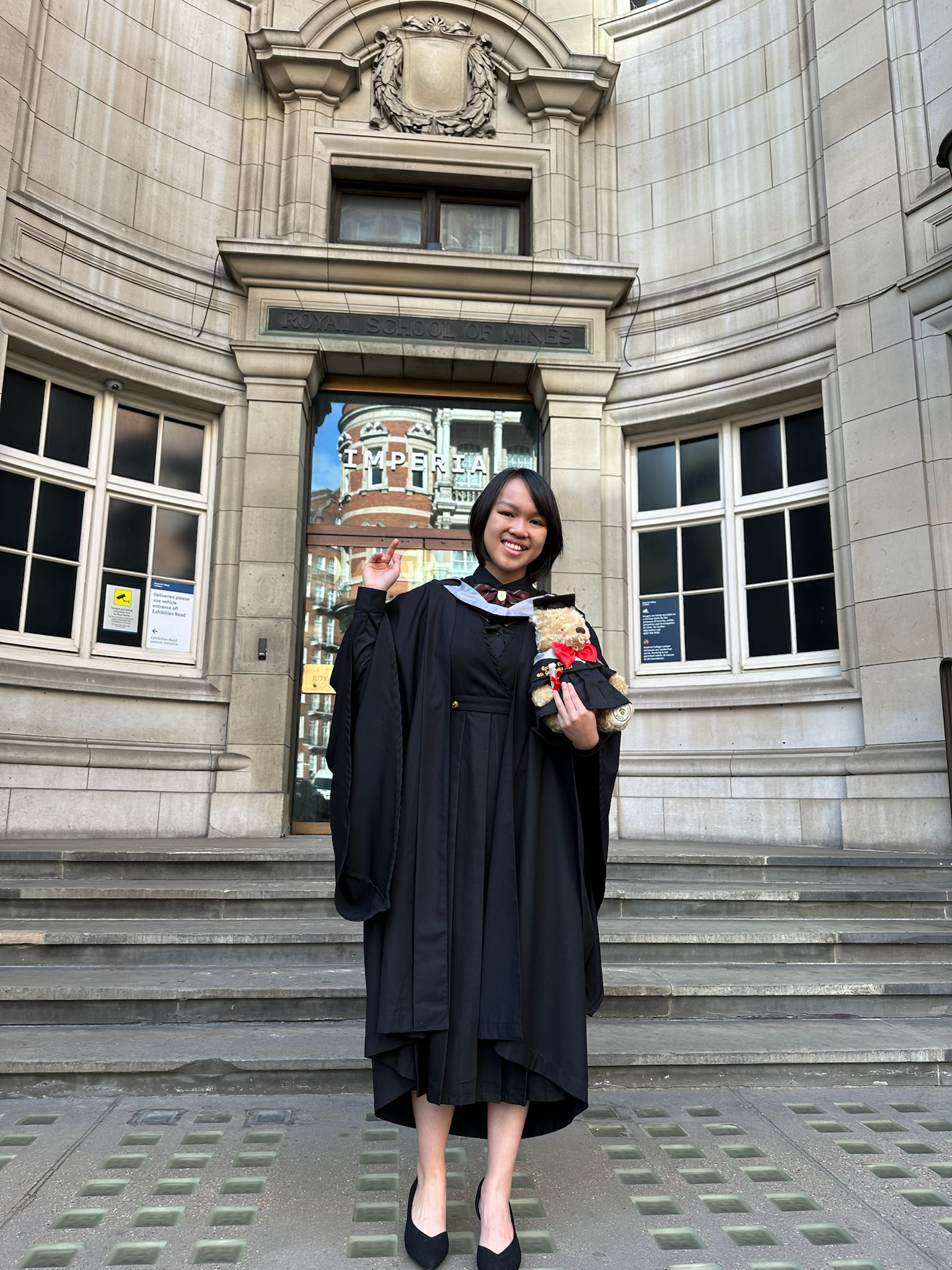
Bio: I am currently pursuing a Master’s degree in Geophysics at Imperial College London. Growing up in Hong Kong, a tectonically quiet region where geology is often undervalued and overlooked, I developed a strong interest in active tectonic processes following the live-streamed coverage of the 2011 Japan Tohoku earthquake. After organising numerous geological field trips around Hong Kong, I was inspired to relocate to London three years ago to pursue my goal of conducting research in the earth sciences. As part of my Master’s degree, I am also embracing my newfound passion for programming by applying data science and machine learning techniques to enhance research in geophysics.
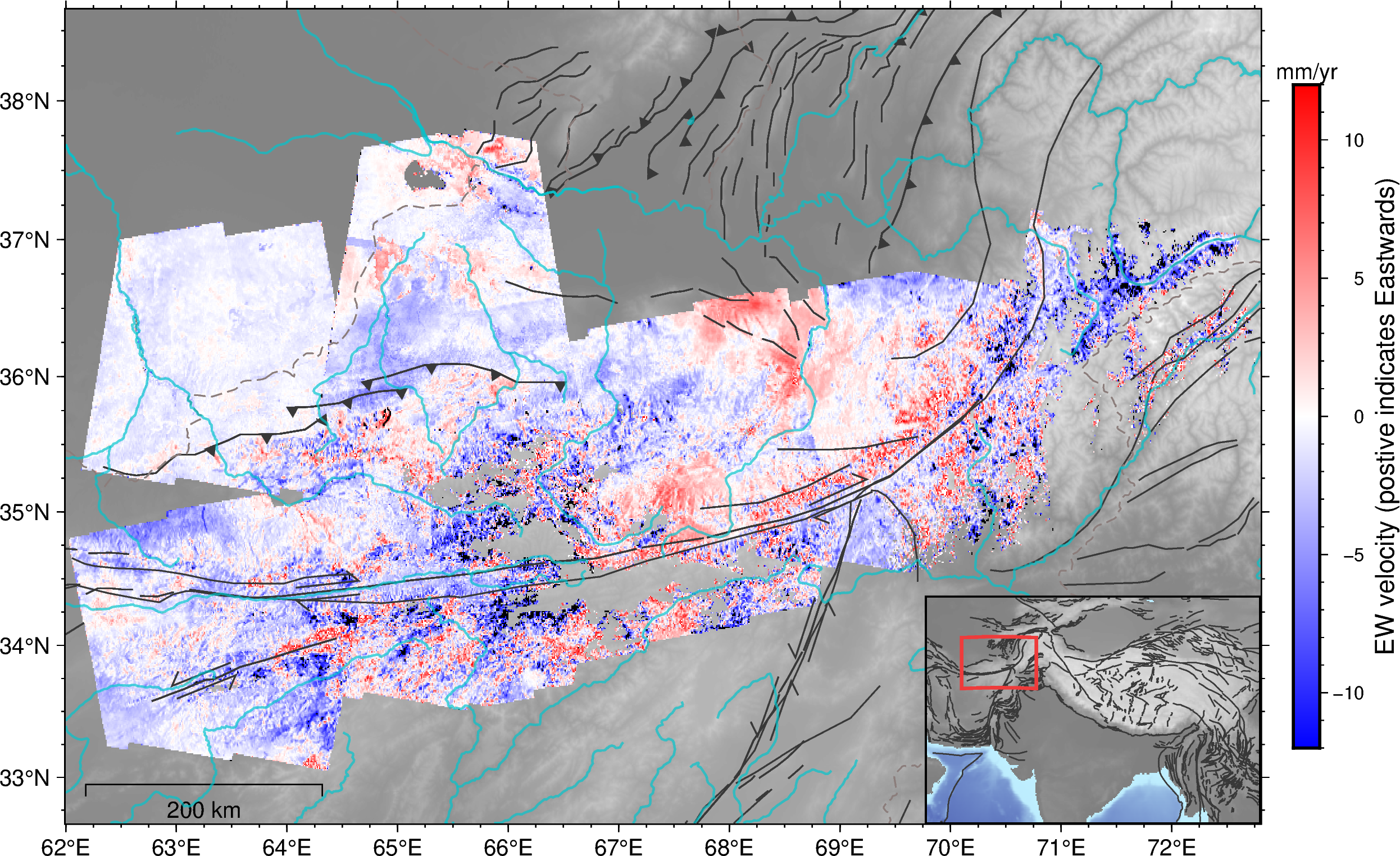
Project: Afghanistan is prone to large, devastating earthquakes due to its location within a major tectonic collision zone. However, due to limited accessibility and a lack of GPS stations, research into the region’s active tectonics has been restricted. Throughout this project, we applied state-of-the-art processing techniques to satellite data in order to image surface deformation in central Afghanistan. Using analytical modelling, we then constrained key information about the seismic activity of the Herat fault. While further research is necessary to fully understand the dynamics at play, this work provides valuable insights into assessing the seismic hazard of the region, particularly for the cities of Herat and Kabul.
Outputs: This project was summarised in the following report:
There, we delve into the technicalities behind InSAR processing and time-series analysis to produce regional east-west and vertical deformation-rate maps covering central Afghanistan. Following this, we applied analytical modelling to provide the first-ever modern slip rate constraints on the Herat fault, revealing the complex fault dynamics and tectonics within the region.
I had the opportunity to present my findings to the Institute of Geophysics and Tectonics at the University of Leeds, and I will be presenting at the COMET student meeting in January 2025 at the University of Bristol.
As a side project, we also developed an interactive GMT/pyGMT visualizer in Jupyter notebook. This tool allows users to generate interactive maps from GMT/PyGMT figures where you can click to retrieve map coordinates. This code is freely available on my GitHub https://github.com/chelle0425/IntPyGMT, and it will be integrated into COMET’s LiCSBAS tutorial materials used during the international COMET InSAR Workshop 2024.
The overall experience: My COMET internship was an incredibly rewarding experience that provided me with first-hand experience of what research really involves. This project thoroughly deepened my understanding of InSAR imaging and processing for continental deformation, all within an environment where I felt encouraged to ask questions and delve into the nuances of scientific research. Interestingly, remote sensing was one of the few subjects I struggled with during my undergraduate studies. Not only was I able to confront that challenge directly, the rigorous coding projects cultivated my passion for scientific data analysis, which I am excited to refine further through my Master’s studies.
Milan Lazecky, my primary supervisor, was an exceptional mentor, who taught me invaluable lessons from tackling research with relentless curiosity to problem-solving through the perspective of a scientific algorithm developer. John Elliott, my other supervisor, was also incredibly supportive, and I always left our discussions with newfound insight and a deeper understanding of the topic at hand. Outside of research, I appreciated the supportive atmosphere of the research group, whether it was through insightful lunchtime discussions or casual music jams.
Overall, I am deeply grateful for this experience, as it has shaped my growth as a researcher and solidified my desire to pursue a PhD in geosciences.