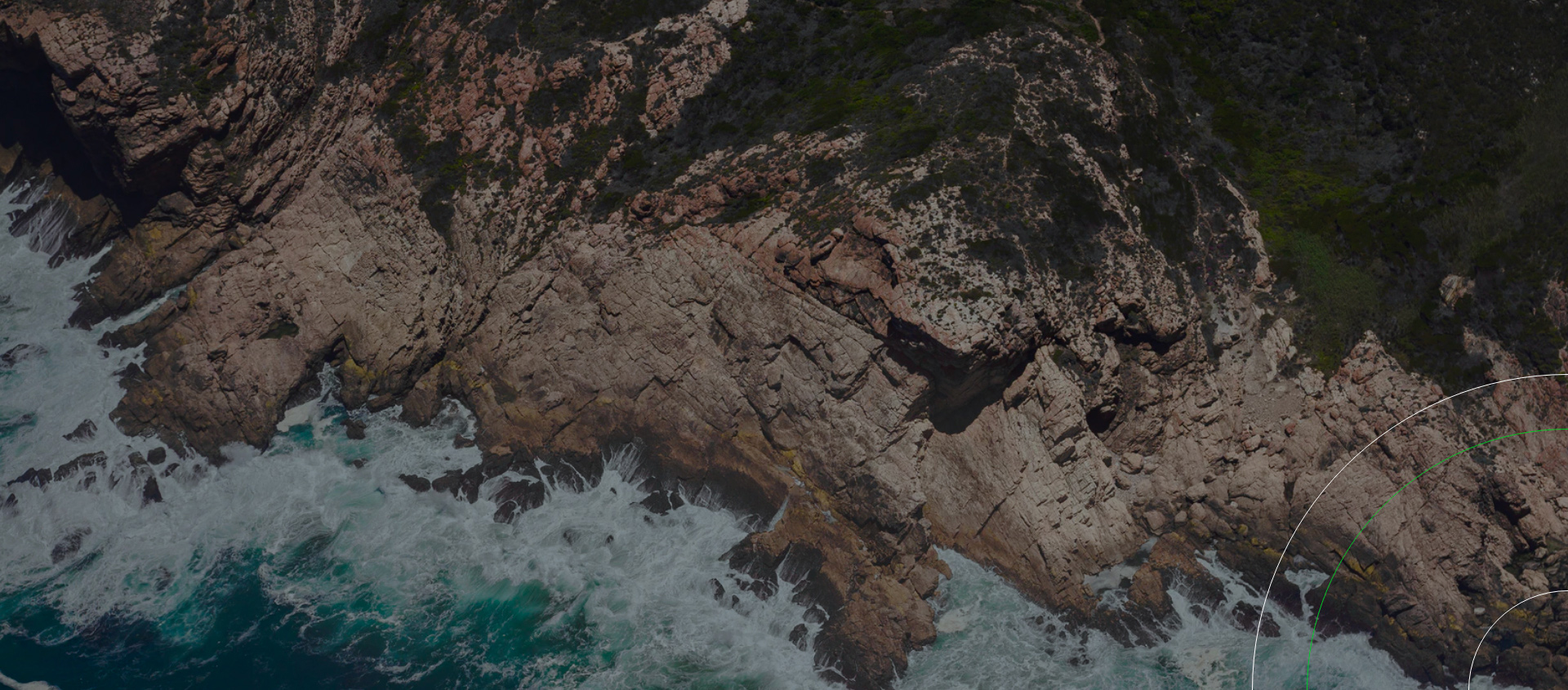
COMET scientists are at the forefront of international efforts to monitor active volcanism by combining satellite observations of deformation (changes in the size or shape of a volcano or the surrounding areas), topographic change (shifts in a landscape’s surface or physical features), and volcanic gases with ground-based observations.
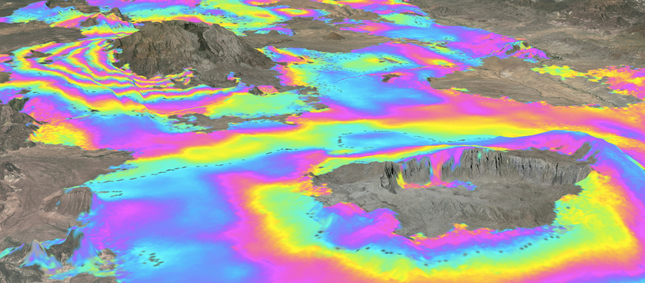
We have conducted a series of multiscale, multi-observable studies of recent eruptions, and COMET scientists have been key international partners during the response to major volcanic crises, including major events at Fentale (Ethiopia), Fagradalsfjall (Iceland), La Soufriere (St Vincent) and La Palma (Spain).
Through the BGS we provide weekly briefs to the UK government on volcanic activity globally through International Forward Look and the EU through ARISTOTLE, with the ability to increase reporting frequency during crises.
We have been developing interactive tools targeted at volcano observatories, as well as exploiting new advances in machine learning to flag volcanic deformation events. We have also developed new methods to produce near real-time SO2 flux and plume height time series data during explosive eruptions and passive degassing.
By combining satellite observations with detailed understanding of physical processes and evolving understanding of magmatic conditions under the ground, COMET scientists are helping to understand subsurface processes and build new models of magmatic processes.
If we wish to stop eruptions from becoming disasters we need to (i) make rapid observations and quickly identify potential precursory signals, (ii) interpret these using reliable modelling frameworks and (iii) work in partnership with local volcano observatories and volcanic ash advisory centres to enable them to make improved critical decisions.
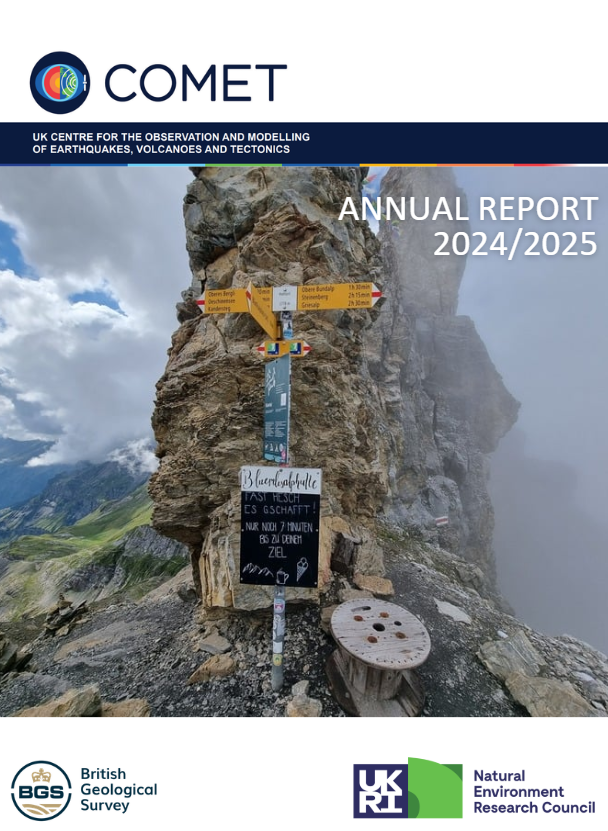
The 2024/2025 COMET Annual Report is now available to view online
Click here to read previous annual reports, from 2014-present.