The 2013 Mw 7.7 Balochistan earthquake in Pakistan: Not so unusual

The 2013 Mw 7.7 Balochistan earthquake in Pakistan: Not so unusual

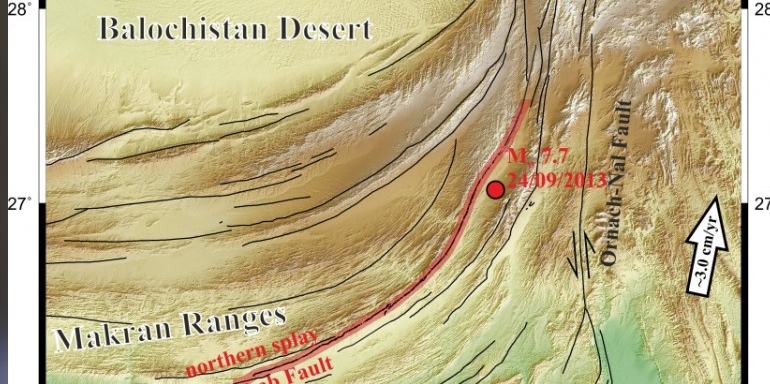
In 2013, a MW7.7 earthquake struck Balochistan, caused a huge surface offset and triggered a small tsunami in the Arabian Sea.

The apparently strange fault behaviour attracted the attention of scientists worldwide and discussion is still ongoing.

This an interesting case for paleoseismologists, not only because of the cascading earthquake effects, but also because of the surface rupture distribution, from which we might learn some important lessons.

COMET student Yu Zhou and his colleagues from Oxford University have published a new paper on this event, arguing that it might be not as unusual as it seems. Their research is based on the analysis of Pleiades stereo satellite imagery, which has proven to be a very useful data source.

You can read Yu’s blog on the palaeoseismicity.org website.
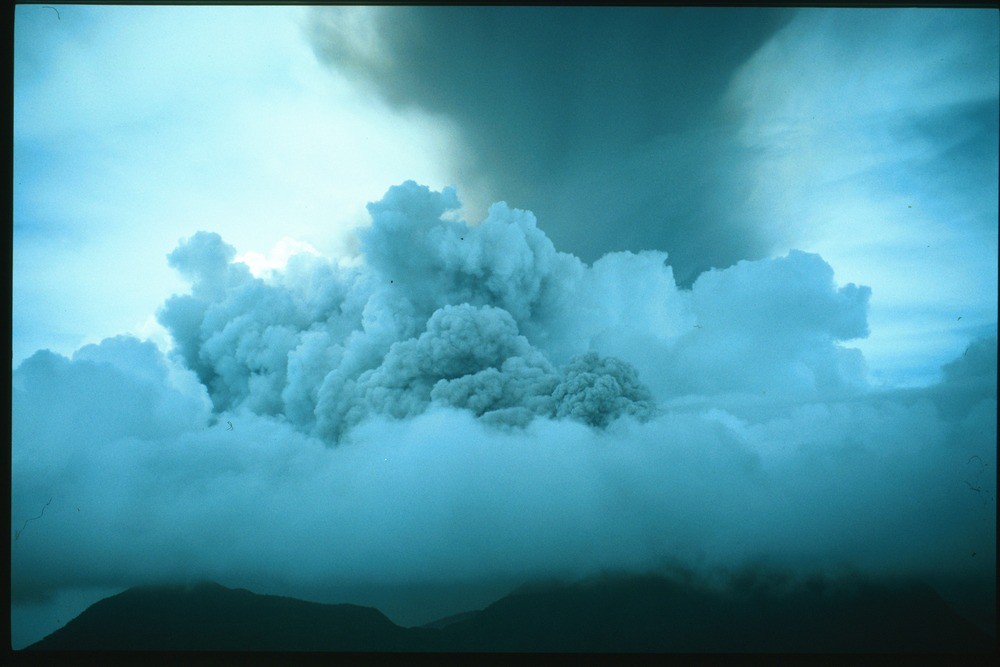
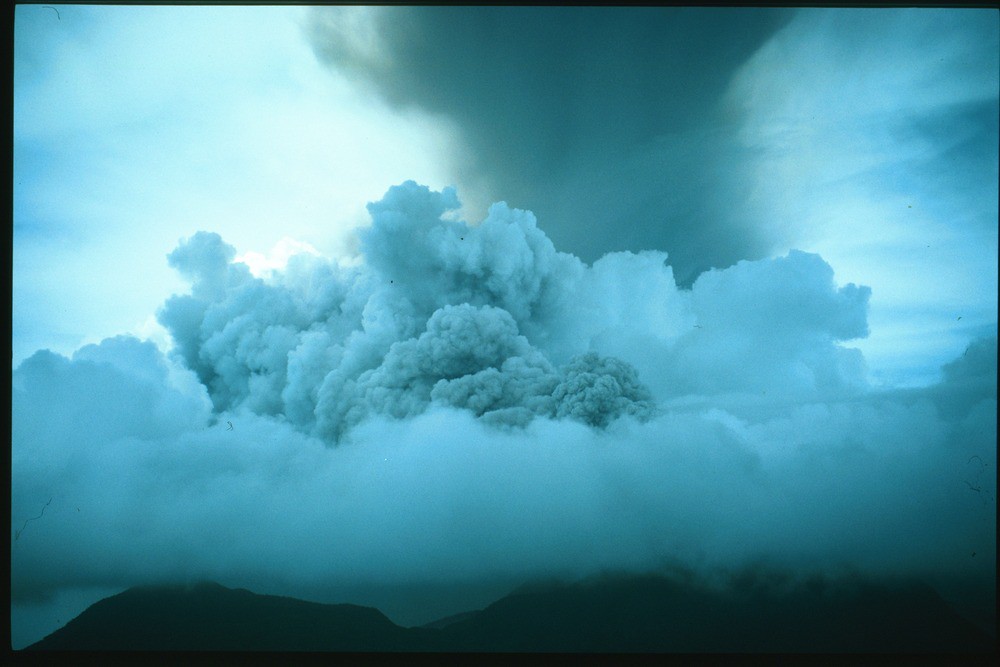
Measuring the refractive index of volcanic ash – new paper in Journal of Geophysical Research

COMET scientists’ Tamsin Mather, David Pyle and Roy Grainger have a new paper in the Journal of Geophysical Research on the detection and quantification of volcanic ash.

Credit:BGS

This is extremely important to the aviation industry, civil defence organisations and those in peril from volcanic ash fall, using remote sensing techniques to monitor volcanic clouds and return information on their properties.

The paper presents the complex refractive index of volcanic ash at 450.0 nm, 546.7 nm and 650.0 nm from eruptions of Aso (Japan), Grímsvötn (Iceland), Chaitén (Chile), Etna (Italy), Eyjafjallajökull (Iceland), Tongariro (New Zealand), Askja (Iceland), Nisyros (Greece), Okmok (Alaska), Augustine (Alaska) and Spurr (Alaska).

You can find the full paper, Measurements of the complex refractive index of volcanic ash at 450, 546.7 and 650 nm in the Journal of Geophysical Research, doi: 10.1002/2015JD023521

Dr Paola Crippa awarded L’Oréal-UNESCO For Women In Science Fellowship

COMET Research Associate Dr Paola Crippa, from the University of Newcastle, has been awarded a prestigious L’Oréal-UNESCO National For Women In Science Fellowship.

This programme encourages greater participation of women in science across the globe by promoting and rewarding outstanding female postdoctoral researchers.

One of five winners, Paola was selected by a jury of eminent scientists, chaired by Professor Pratibha Gai who was L’Oréal’s International Laureate in 2013.

Her research, focusing on particulate matter transportation and implications for human health,  integrates model results with satellite data to more accurately predict population exposure to harmful concentrations of particulate matter.

Paola will not only benefit from financial support for her research, but also a raft of career and life enhancing experiences such as media training, personal impact coaching, speaking opportunities, networking events and access to senior mentors and role models.

Congratulations Paola from all at COMET.