PDRA Position in Volcanic Conduit Flow Modelling – University of Manchester

PDRA Position in Volcanic Conduit Flow Modelling – University of Manchester

The University of Manchester is looking for a Postdoctoral Research Associate in numerical modelling of volcanic conduit flow.

The post is part of the ‘Expecting the Unexpected: Understanding “Dangerous” Volcanic Transitions (Ex‑X)’ project funded by the Natural Environment Research Council (NERC).

The PDRA will be based in the Department of Earth and Environmental Sciences at the University of Manchester. They will work under the joint supervision of Prof Mike Burton and Dr Chris Johnson at Manchester, and Dr Giuseppe La Spina (INGV Catania, Italy).

The PDRA will collaborate with the wider Ex-X project team, led by Prof Jenni Barclay. They will work with Prof Jeremy Philipps and Dr Mark Woodhouse (University of Bristol) on coupled conduit-plume modelling, with Dr Jessica Johnson and Dr Richard Herd (University of East Anglia) on integration with geophysics, with Prof Pyle (University of Oxford) on integration with petrology and Prof Paul Cole (University of Plymouth) on ground-truthing with volcanological deposits. Ex-X will work closely with Volcano Observatory partners in the Caribbean.

The purpose of the role is to develop, implement, test and validate time‑dependent conduit flow models to investigate the physical drivers of rapid eruptive transitions under varying pressure, temperature, volatile and crystallisation conditions. The PDRA will couple these models with time-dependent magma-reservoir and eruption-column models and compare the results with field data from explosive eruptions in the Caribbean.

Salary: £37,694 – £46,049 per annum

Closing date: 09/01/2026

Post duration: 42 months

More information and to apply: https://www.jobs.manchester.ac.uk/Job/JobDetail?JobId=33489

Enquiries about the vacancy, shortlisting and interviews: 

Prof Mike Burton – [email protected]
Dr Chris Johnson – [email protected]
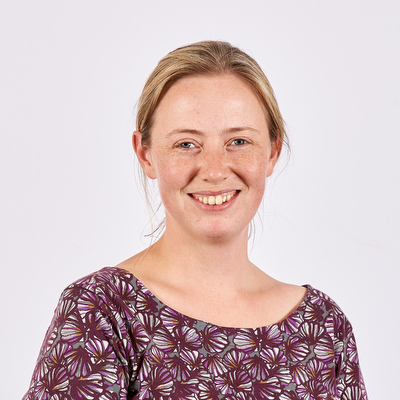
COMET Scientist Appointed Professor of Volcano Remote Sensing

We are delighted to celebrate the promotion of COMET Scientist Susanna Ebmeier (University of Leeds) to the position of Professor of Volcano Remote Sensing. 

Susanna Ebmeier has built an outstanding reputation for her expertise in volcano research using satellite-based remote sensing. Her work has focused on understanding how satellite imagery can be used for volcano monitoring and volcanic hazard assessment. This has provided crucial insights that support communities affected by volcanic activity.

In addition to her scientific achievements, Susanna Ebmeier is recognised for fostering a collaborative, inclusive and supportive research culture within the School of Earth and Environment. She is highly regarded for her dedication to supervising and mentoring postgraduate researchers.

We extend our warmest congratulations to Professor Ebmeier on this well-deserved achievement and wish her every success in the future.

Science Diplomacy: Strengthening UK Links with the China Earthquake Administration 

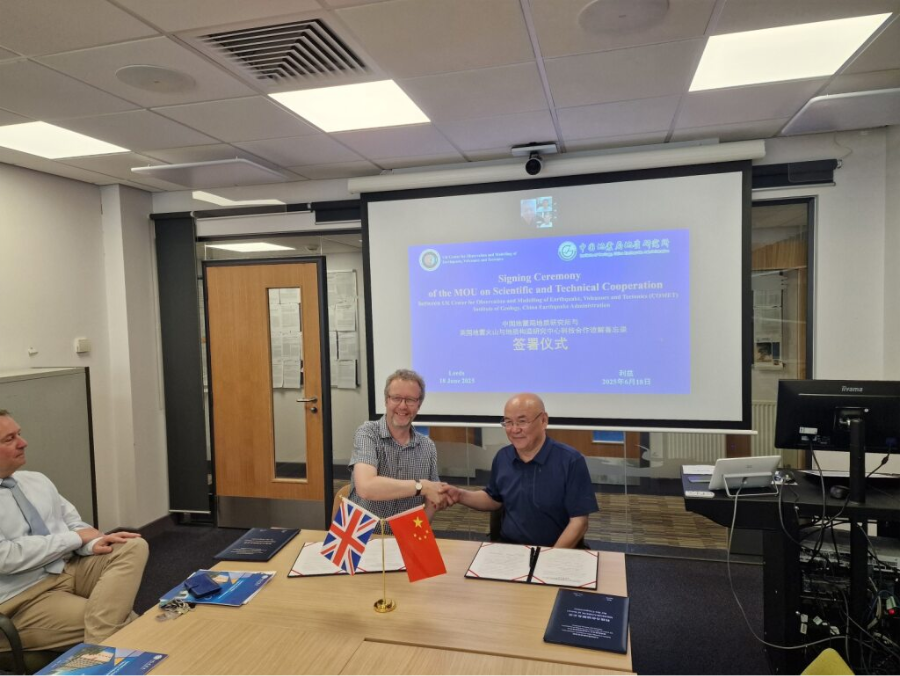
In June 2025, the UK Centre for Observation and Modelling of Earthquakes, Volcanoes and Tectonics (COMET) welcomed a delegation from the Institute of Geology at the China Earthquake Administration (CEA) to formalise two decades of collaboration through a joint Memorandum of Understanding (MoU) 

Building on Twenty Years of Partnership 

The delegation visited both the University of Bristol and the University of Leeds (COMET’s co-lead institutions), where CEA members shared their research and future visions while learning about COMET’s work and strategic plans.  

This partnership has already shown remarkable results, with at least 60 co-authored papers published over the years and numerous joint research projects that have advanced understanding of seismic and volcanic hazards. Following on from a productive high-level visit from the CEA last year, the new MoU will significantly strengthen these ties, offering new opportunities to reduce the social and economic impact of seismic or volcanic events and build global resilience to natural hazards.  

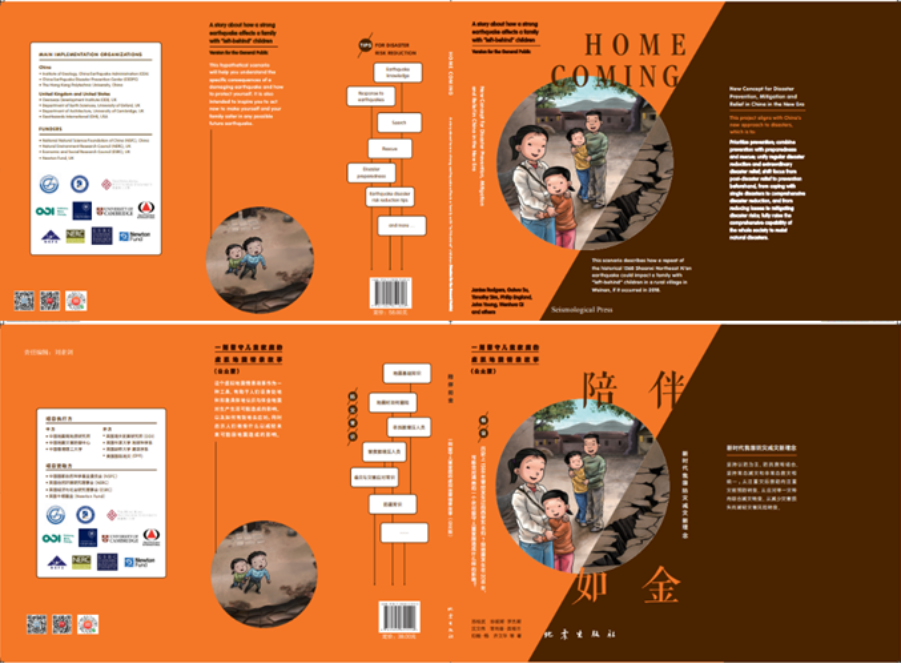
Co-Authored Earthquake Science Picture Book with the CEA, Oxford & Cambridge

Advancing Global Safety Through Science  

By deepening this collaboration, both organisations aim to advance current understandings of earthquakes and volcanoes, with the ultimate aim of enhancing protection for citizens, not just from the UK and in China, but across the globe. The partnership represents a clear example of how international scientific cooperation can address challenges that transcend national borders. 

A Vision for the Future 

Looking ahead, the CEA and COMET will explore the possibility of co-founding a major international science programme focused on frontier research in earthquake and volcano science. This ambitious initiative would unite organisations, scientists, data, and funding from both nations, fostering open collaboration and knowledge sharing while establishing robust frameworks for seismic and volcanic data exchange to enhance monitoring and analysis. 

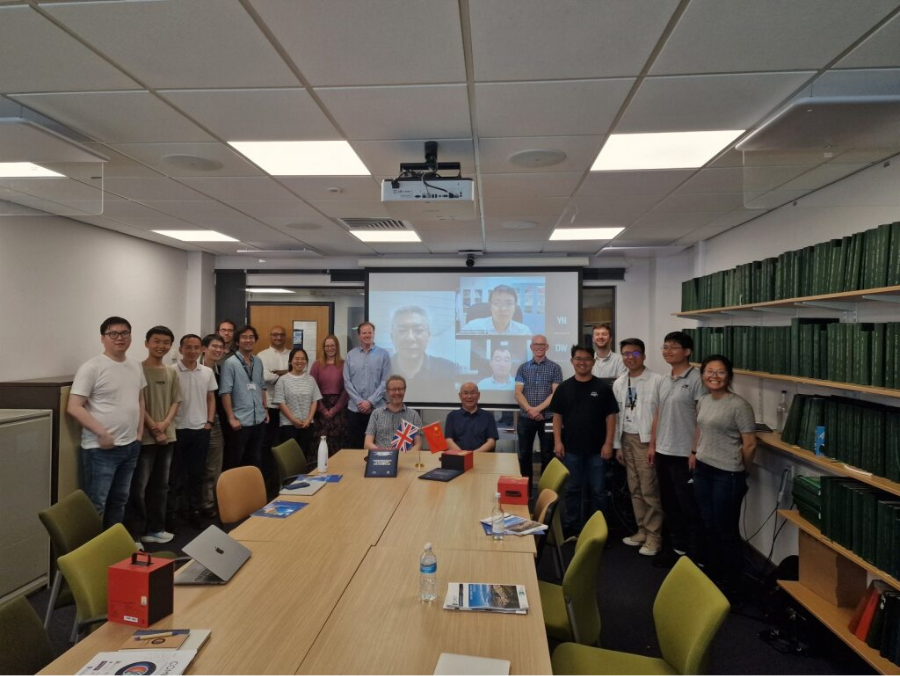
COMET and the CEA presentations, June 2025

The partnership will explore several collaborative opportunities, including:  

Academic Exchange and Development 

  • Student and faculty exchanges to share ideas and expertise, 
  • Joint PhD supervision programmes, linking UK and Chinese institutions, 
  • Shared research initiatives with combined funding support. 

Fieldwork and Innovation 

  • Conducting joint field studies and expeditions to active seismic and volcanic regions, 
  • Development of a pioneering ‘Joint International Research Laboratory of Earthquake and Volcano Sciences’. 
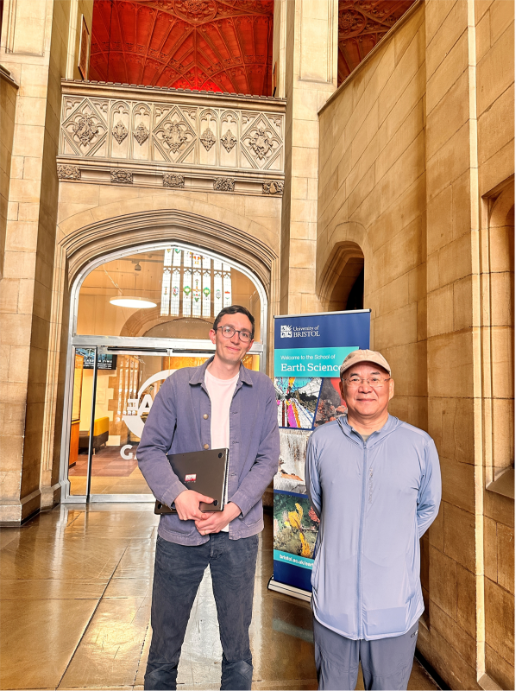
Visit to the University of Bristol as part of the delegation visit: Professor Shan Xinjian (Institute of Geology, China Earthquake Administration) and Dr Sam Wimpenny (COMET, University of Bristol) 

The Bigger Picture  

This collaboration exemplifies COMET’s commitment to international partnership and diplomatic engagement through science.  

By developing sustained, long-term relationships with key global partners, COMET demonstrates how scientific cooperation can serve as a bridge between nations, creating mutually beneficial knowledge exchange that ultimately serves humanity’s common interests in understanding and preparing for natural hazards.  

Ceremonial signing of the Memorandum of Understanding: Professor Shan Xinjian (Institute of Geology, China Earthquake Administration) and Professor Tim Wright (COMET, University of Leeds)

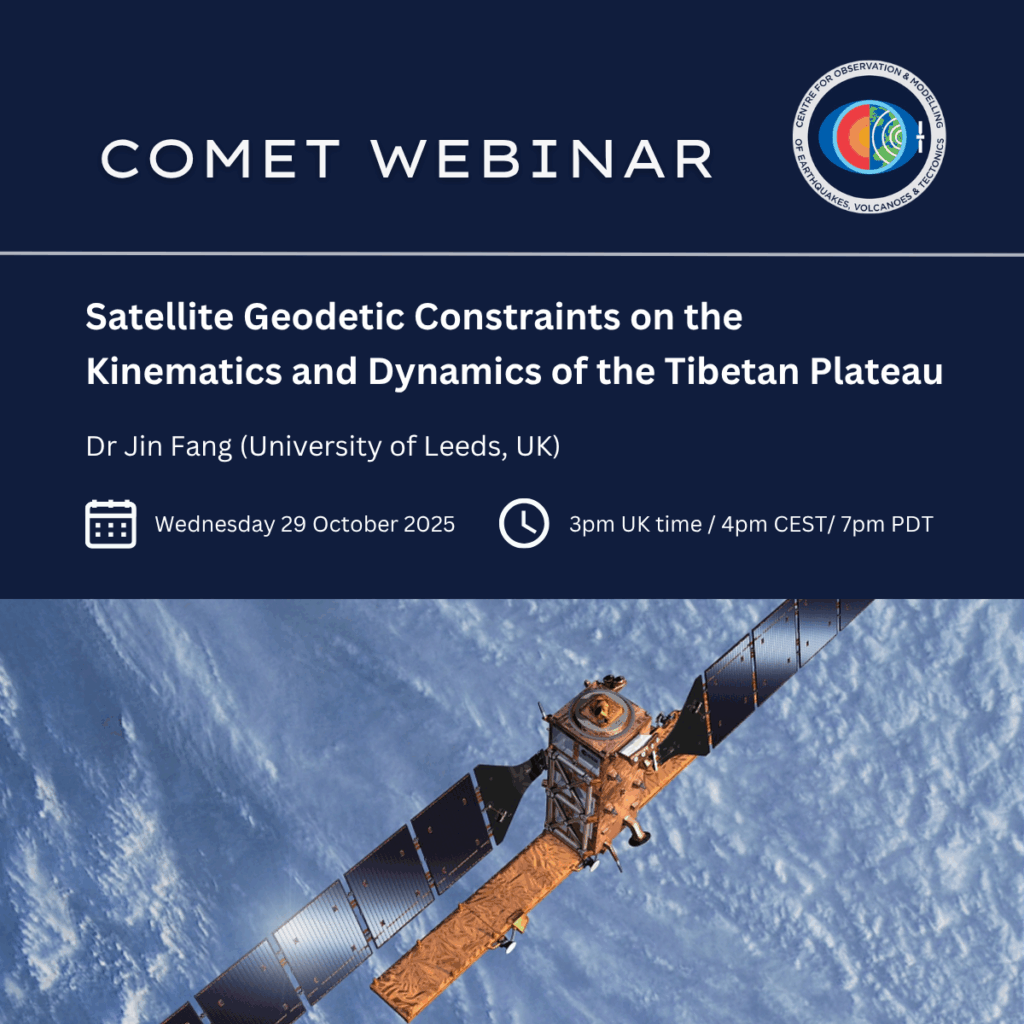
Join us for the next COMET webinar

The UK Centre for Observation and Modelling of Earthquakes, Volcanoes and Tectonics (COMET) invites you to the next instalment of our COMET webinar series, viewable from the home office.

We are pleased to welcome Dr Jin Fang, a COMET Research Fellow from the University of Leeds, as our speaker.

Title of the talk: Satellite Geodetic Constraints on the Kinematics and Dynamics of the Tibetan Plateau

📅 Date: Wednesday, 29 October 2025
⌛ Time: 3 PM UK time (4 PM CEST / 7 PM PDT)
📍 Location: Online

🔗Register: https://events.teams.microsoft.com/event/90d76047-3da9-4a4a-96fc-1a9ba2429223@b311db95-32ad-438f-a101-7ba061712a4e

Celebrating Research Excellence: COMET Scientists Elected to The Academia Europaea

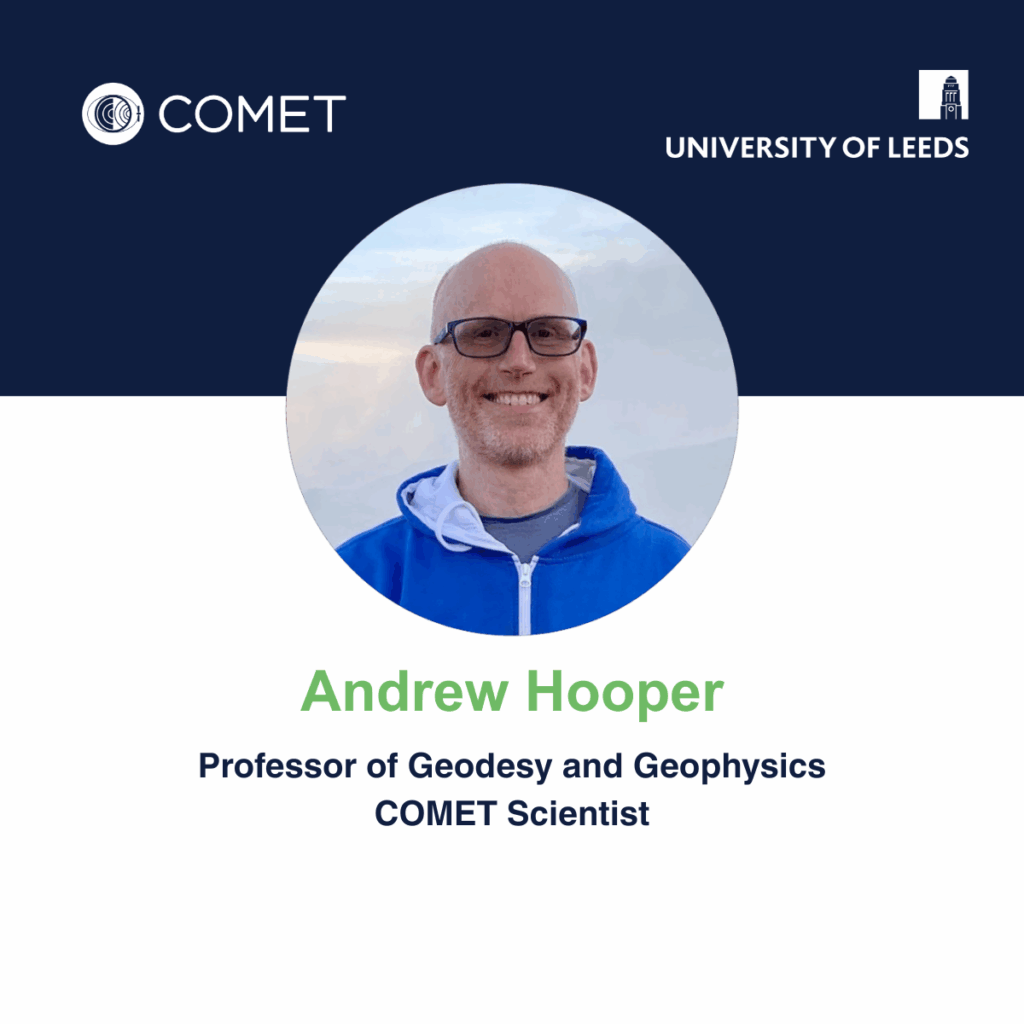
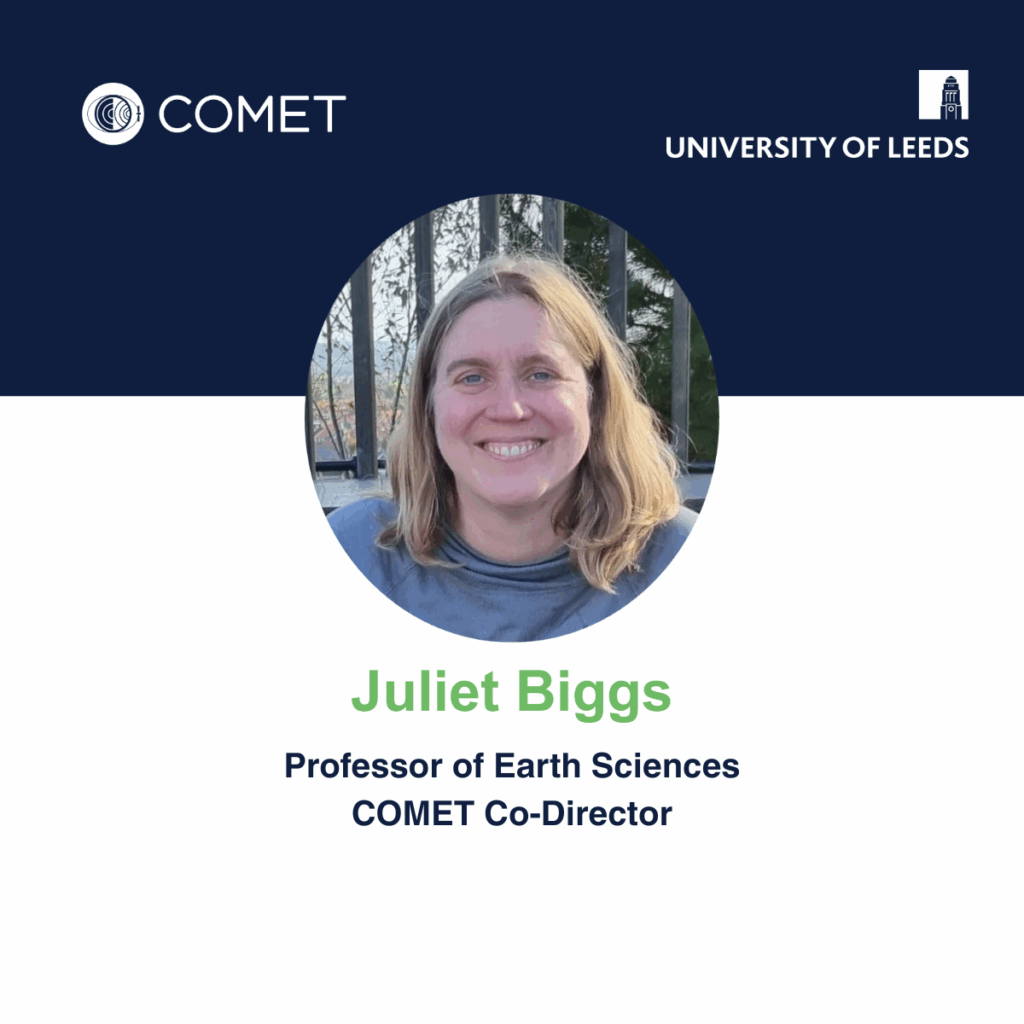
We are delighted to congratulate COMET Scientist Professor Andy Hooper (University of Leeds) and COMET Co-Director Professor Juliet Biggs (University of Bristol) on their election to the Academia Europaea.

The Academia Europaea is a pan-European academy that recognises scientists and scholars who have demonstrated sustained academic excellence and international impact in their fields. Election to membership is by invitation only and implies a great recognition of one’s academic work.

The Academia Europaea aims to promote European research, advise governments and international organisations in scientific matters, and further interdisciplinary and international research.

Professor Andy Hooper and Professor Juliet Bigg’s work has played a significant role in advancing our understanding of Earth processes and increasing public awareness of volcanic and seismic hazards.

We warmly congratulate them on this well-deserved recognition.