Sentinel maps Nepal earthquake 2015

Sentinel maps Nepal earthquake 2015

On 25 April, a 7.8-magnitude earthquake struck Nepal, claiming over 8,000 lives and affecting millions of people.

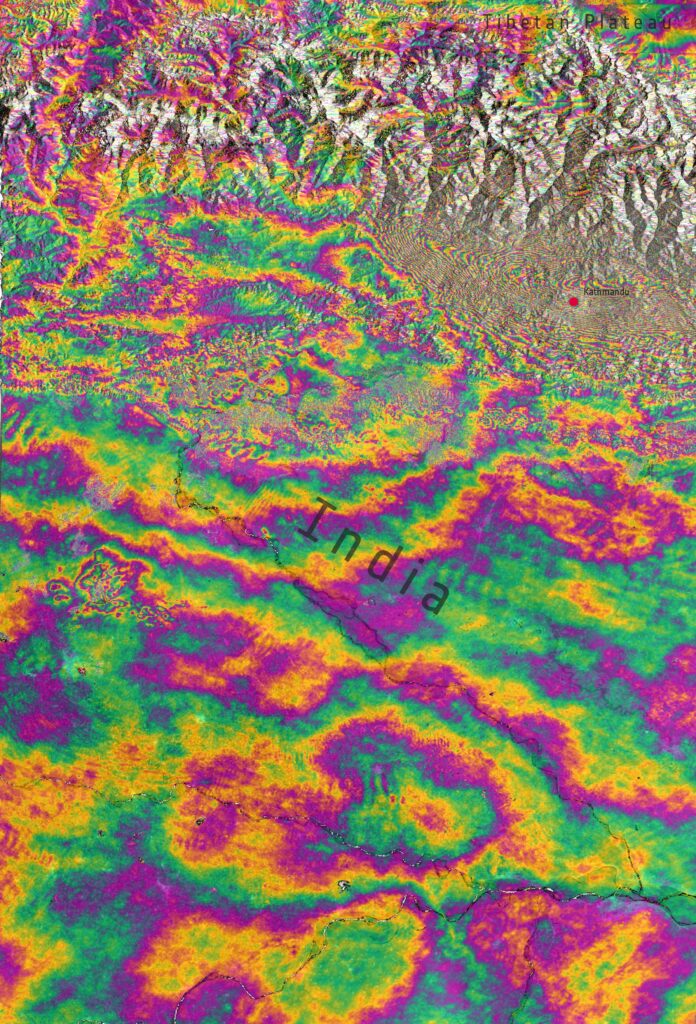
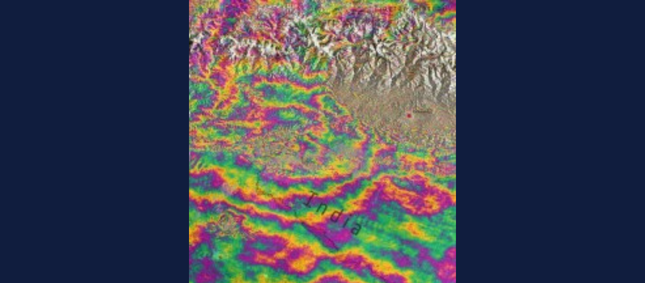
Images from ESA’s Sentinel-1A satellite clearly showed the effects of the earthquake, including the maximum land deformation only 17km from Nepal’s capital, Kathmandu.  This explains the extremely high damage to the area.

Nepal earthquake April 2015.  Credit: Copernicus data (2015)/ESA/Norut/PPO.labs/COMET–ESA SEOM INSARAP study
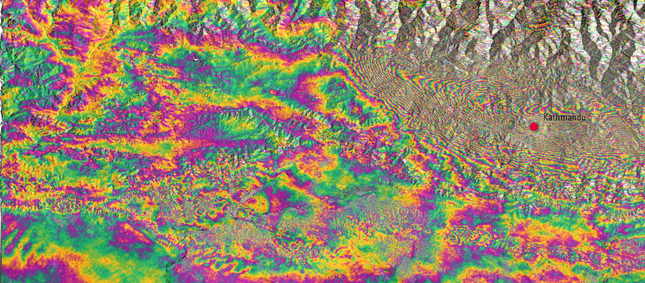
Nepal earthquake April 2015. Credit: Copernicus data (2015)/ESA/Norut/PPO.labs/COMET–ESA SEOM INSARAP study

By combining Sentinel-1A imagery from before and after the quake, COMET scientists have been able to interpret the rainbow-coloured interference patterns in the image (known as an interferogram), and interpret them as changes on the ground.  COMET scientists have also been analysing the 12 May aftershock.  You can read more here.
Nepal earthquake

COMET scientists have been closely involved with international efforts to analyse satellite data from the recent Nepal earthquake.

Combining two Sentinel-1A radar scans from 17 and 29 April 2015, this interferogram shows changes on the ground that occurred during the 25 April earthquake that struck Nepal. An overall area of 120×100 km has moved – half of that uplifted and the other half, north of Kathmandu subsided. Vertical accuracy is a few cm. Credit: Copernicus data (2015)/ESA/Norut/PPO.labs/COMET–ESA SEOM INSARAP study

You can read more about the Sentinel-1A interferogram on the ESA website.

Links to some of the broader media coverage of our work can be found below.

BBC World Service Science Hour 02.05.15

Listen to Tim Wright describing images of the Nepal earthquake from Sentinel-1A satellite

BBC website 01.05.15

James Jackson, Philip England and Richard Walters are quoted in this article explaining why the Nepal earthquake was so deadly

BBC website 29.04.15

Tim Wright describes the Sentinel-1A interferogram of the area affected by the Nepal earthquake

EOS 27.04.15

James Jackson explains the risks associated with the Nepal earthquake

COMET scientists analyse Chile’s Calbuco eruption in 2015

On 22nd April 2015 Calbuco volcano, Chile, erupted for the first time since 1972 with very little warning. Plumes of volcanic ash reached heights of 16 km on the 22nd and up to 17 km in a second, longer eruption that began in the early hours of 23rd April.

Several thousand people were evacuated from villages closest to Calbuco , and ash fell over an area extending from the west coast of Chile to the east coast of Argentina, and grounded air traffic in Chile, Uruguay and Argentina.

COMET scientists have been using satellite data to analyse the event, in terms of both the emissions and changes to the shape of the volcano itself.  You can read more about the event here.

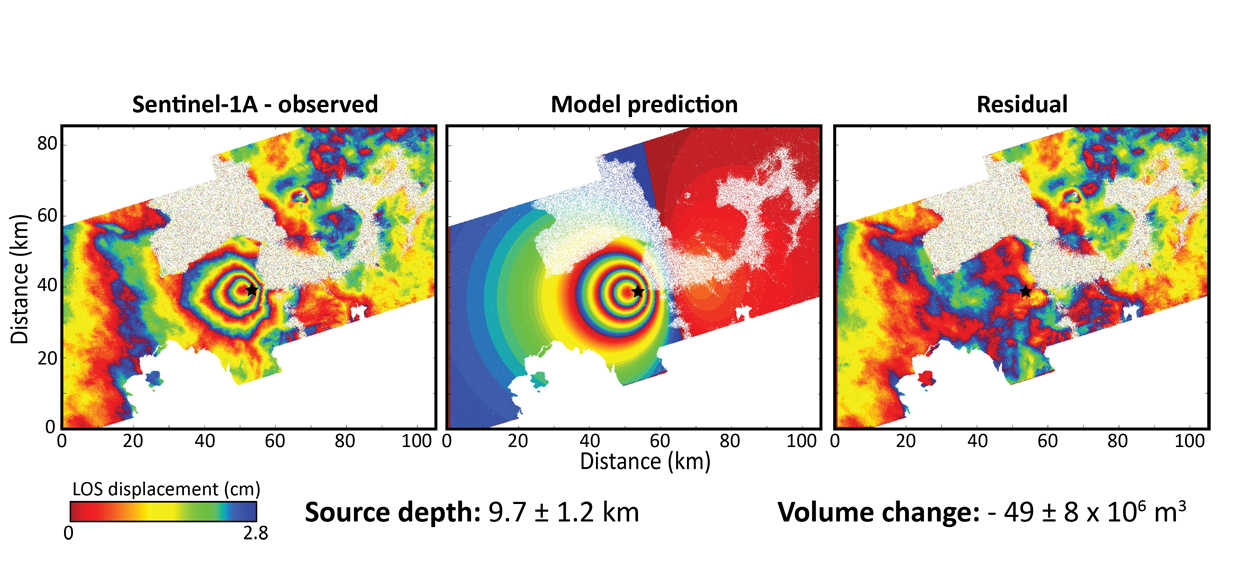
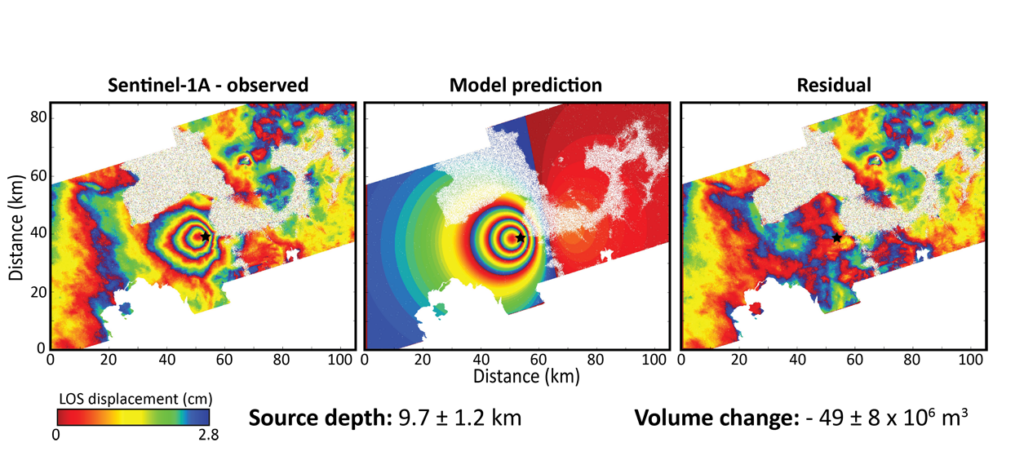
Data, spherical source elastic half space model and residuals for recent deformation at Calbuco [Bagnardi].